Read our new article «Ex - Jehovah's Witnesses, who are now members of the Catholic Church, share their personal stories»
Showing posts with label CHRISTIANITY. Show all posts

Sunday, 10 February 2019

THE PRECURSORS OF CHRISTIAN MONASTICISM AND ASCETICISM: PYTHAGORAS – PYTHAGORISM


Translated from the original by Costas Balomenos


Pythagoras
                                                       
T
he main characteristic of the ancient Greek religion as developed through the two masterpieces of Homer's epics, the “Iliad” and “Odyssey” and from Hesiod in his “Theogony” isRead more to the site “Antiairetikos”

Tuesday, 22 January 2019

How is certified the authenticity of the New Testament, since the originals have been lost?


Translated from the original by Costas Balomenos


Many skeptics or critics of authenticity of the New Testament and by extension of ChristianityRead more to the site “Antiairetikos”

Sunday, 23 September 2018

THE “AGRAFA” (UNWRITTEN WORDS) OF CHRIST


Translated from the original by Costas Balomenos


with the Greek word Agrafa” (Unwritten words) are invited internationally the words attributed to Jesus i.e. that they had been said from him – by some writersRead more to the site “Antiairetikos”

Thursday, 30 August 2018

DIVERSIONS OF THE CHRISTIAN MONASTICISM


Translated from the original by Costas Balomenos


T
he monachism was born from the need of some Christians to leave the social - cosmic life, to dedicate themselves completely to God.Read more to the site “Antiairetikos”

Wednesday, 15 August 2018

THE “APOCALYPSE” (REVELATION) OF JOHN: THE MOST CONTROVERSIAL BOOK OF NEW TESTAMENT


Translated from the original by Costas Balomenos


The book of “Apocalypse of John” is the last book of the New Testament canon. It belongs to the Jewish and Christian apocalyptic secretariatRead more to the site “Antiairetikos”

Monday, 16 July 2018

The historical origins of the Filioque


Translated from the original by Costas Balomenos


As is known, the two most determinant factors that were the cause to become the schism in the Christian Church and thus be divided into East and West Read more to the site “Antiairetikos”

Saturday, 24 February 2018

THE FASTING OF THE FIRST CHRISTIANS IN THE PERIOD OF EASTER


Translated from the original by Costas Balomenos


I
n many believers (or not) there is confusion about the ecclesiastical things and habits that occur within the Church.Read more to the site “Antiairetikos”

Sunday, 21 January 2018

THE DOCTRINAL SYSTEM OF ORIGEN


Translated from the original by Costas Balomenos


O
rigen (185 - 253/254 AD) is undoubtedly one of the greatest men, not only of the Church, but also more widely and certainly is the most fertile writer of the early Church.Read more to the site “Antiairetikos”

Saturday, 30 December 2017

THE CHRIST ’S ATTITUDE TOWARD IN LOVE


Translated from the original by Costas Balomenos


O
n the subject of lovemaking, in the ecclesiastical place became one more perversion of Christian teaching, which was based on the impression, that the sins - associated with the loveRead more to the site “Antiairetikos”

Saturday, 2 December 2017

THE APOSTOLIC FATHERS AND THEIR LITERARY WORKS


Translated from the original by Costas Balomenos


The Apostolic Fathers Clement, Ignatius, Polycarp

With the term "Apostolic Fathers" we mean those writers of the 2nd century AD that their writings are clearly theological content and are a continuation of the authors of the books of the New Testament.Read more to the site “Antiairetikos”

Monday, 6 November 2017

THE VIRGIN MARY IN THE QURAN AND ISLAM


Translated from the original by Costas Balomenos


Islam or Islamism is the religion founded by the Arab Muhammad (570 - 632 AD). The word Islam means subjection to God (Allah). Called Islam and by the word Muslim means faithful, devoted to God (Allah).Read more to the site “Antiairetikos”

THE STATUS OF WOMEN IN ISRAEL, IN THE YEARS OF CHRIST


Translated from the original by Costas Balomenos

The man in Israel had unlimited rights as a father that apply to the members of his family. Rights applicable much longer in the face of his wife. And here was a paradox. What was this?Read more to the site “Antiairetikos”

THE ANTICHRIST THROUGH THE CENTURIES


Translated from the original by Costas Balomenos


I
t has been observed and is historically accurate that the periods of economic and social crises such as wars, revolutions, famines, epidemics, etc. as well as several natural disasters are construed from a large part of the faithful - many times from all the faithful - as warning signs of the Second Coming of the Lord.Read more to the site “Antiairetikos”

Friday, 3 November 2017

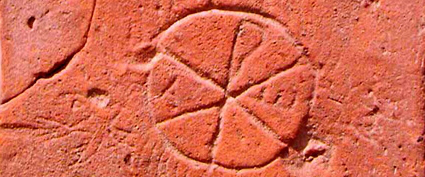
CHRISTIAN SYMBOLS AND THEIR MEANING


Translated from the original by Chris Tsilikas


Orpheus – Christ

The human need for divine communication, the need to feel the divine nature close to him/her and thank it, existed right from the beginning of human existence and was expressed not only through worship and prayer, but through art as well. Read more to the site “Antiairetikos”

Sunday, 23 October 2016

What they were thinking about the stars and demons, in the years of Jesus


Translated from the original by Costas Balomenos


S
everal times the Gospel recounts us Jesus to heal people who were under the possession of evil spirits. Christ imparted this privilege and this ability to his disciples when he sent them two by two to preach. Of course, apart from the daemonical there were and others with various mental illnesses, but that was something foreign to the Jews and also to all ancient peoples. For this reason, moreover, they believed that they too belonged to the category of those who were possessed by evil spirits...

Wednesday, 5 October 2016

CANONIZATION IN THE EAST AND WEST CHURCH


Translated from the original by Costas Balomenos


Father Paisius, who “canonized” by the Eastern Church


I
n the first Christian community, as we know mainly from the letters of the Apostle Paul, all who were baptized in the name of Holy Trinity were called "saints," not because they were righteous, but because they were baptized, i.e. is because they belonged to this particular new community (church) and were members of the body of Christ: "I send my greetings to the saints of the Church of Corinth", "I send my greetings to the saints of the Ephesian Church". So everybody was holy. Holiness, therefore, is potentially present, and simultaneously has a dynamic...

Thursday, 11 February 2016

Why the Roman State did not accept Christianity as a rightful religion (RELIGIO LICITA)?

Translated from the original by Costas Balomenos


Contrary to Antiochus IV Epiphanes, who with the help of Jewish apostates has tried in 167 BC to introduce the Greek pagan religion, by placing the statue of Zeus in the temple of Jerusalem and to force the Jews to the observance of Greek customs, leading to the outbreak of the revolution of Maccabees, the Romans - when captured Judea - not only respected the unique monotheistic religion of the ancient world, but also the rules of everyday life of the Jews, arising from this...

Wednesday, 25 November 2015

THE MORALS OF CHRISTIANS IN THE 2ND AND 3RD CENTURY

Translated from the original by Costas Balomenos


The Christians was believed about themselves that they are the new Israel (=people of salvation), Israel of God, that guided by the spirit and the grace˙ that they are not citizens of the Roman Empire, but  they constitute a new nation - certainly within its territory - for this reason moreover was praying for the stability of the state and its Governor. They (for the Romans) were saying that they are alien residents and pilgrims - as highlighted very nicely in letter to Diogniton - in this world, for which they believed that will soon be elapsed because it was going to come the Second Coming of the Lord...

Monday, 26 January 2015

THE WORD CHRIST AND HIS MEANINGS IN THE OLD TESTAMENT

Translated from the original by Costas Balomenos


T
he word "Christ" is a translation of the Aramaic word MESHICHA, which also is derived from the Hebrew word MASHIACH, which in the Hellenistic years hellenized in Messiah. In the New Testament, the Greek word Μεσσίας (Messiah) is encountered twice and even is accompanied with the translation Christ”: «First, he finds his brother Simon and tells him, We have found the Messiah, which translated means Christ»  John 1:41 and «He saith to him the woman “I know that will come the Messiah, the so-called Christ”» John 4:25.
The Greek word χριστός(christos) is produced from the verb χρίω(chrio), meaning anoint and was formed by the verbal adjectives ending in τος(-tos), of the Greek language. As an adjective, the word christos is found in the ancient Greek poets of tragedy. Apart from tragedians poets, we meet this and in the Septuagint” (O), who - as we know - they translated the Old Testament from Hebrew into Greek...

Friday, 27 December 2013

Birth of Christ; Son is born in Israel, it is a cause of joy!

Translated from the original by Costas Balomenos


I
n a few days we will celebrate the birth of Christ. A birth, which was the reason to be happy the people, where - finally - is opened again the way for meeting of people with God, which was closed by the sin of Adam.
But we must not forget that for our salvation, Christ chose to be born as a man in the country of Israel. So it is worth at this point to ask ourselves. What it meant to the Israelites the birth of a child, and what manners and customs were following this birth, which were applied to the infant Jesus?
In a Jewish family when a child is born, it was a great pleasure for parents, but also for their relatives and family friends. The village or the neighborhood was learning immediately the joyful event and knew that soon - according to the old custom they would call their relatives, friends and neighbors to have fun...